.svg?iar=0&hash=F6049510E33E4E6D8196C26CCC0A64A4)

/hfh-logo-main--white.svg?iar=0&hash=ED491CBFADFB7670FAE94559C98D7798)
Pulmonary Embolism Is a Life-Threatening Condition
Pain is the body’s natural response to alert you that something is wrong. However, there’s a difference between acute pain and chronic pain.
Our experts offer rapid assessment and treatment for acute pulmonary embolism as well as its chronic forms.
Acute pulmonary embolism is the third most common cause of cardiovascular-related death in the United States behind coronary artery disease and stroke. There are two types of pulmonary embolism:
Typically, an acute PE forms when a new blood clot forms somewhere else in the body. One of the most common causes is a deep vein thrombosis (DVT), when a clot forms in one of the deep leg veins. If the clot detaches, it can travel through the veins in the body to the heart. From there, it passes through the right side of the heart and becomes stuck in one of the pulmonary arteries, the large arteries that lead from the heart into the lungs.
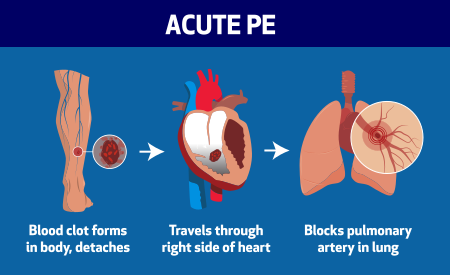
Pulmonary embolism symptoms may mimic those experienced during a heart attack, such as shortness of breath, but a PE may go undiagnosed. Like a heart attack, a PE typically requires emergency treatment. Acute pulmonary embolism treatment may include blood thinners, a clot-busting medication administered through an IV or catheter (thin tube inserted in a blood vessel), clot removal or surgery.
Pulmonary Embolism Is a Life-Threatening Condition
Our multidisciplinary team is available day or night. We are the most experienced pulmonary embolism team in the region and offer fast, expert assessment and acute PE treatment on an outpatient or inpatient basis. For suspected acute PE cases, we activate our pulmonary embolism response team (PERT). You’ll receive care right away from a coordinated group of pulmonary embolism experts, including:

There are several potential risk factors for an acute PE, including:
Age: Acute pulmonary embolism is most common in seniors. However, it can affect a person at any age.
Slow blood flow: The body requires blood to move constantly, and if it moves too slow, it may clot. For example, people riding in a car or plane for many hours at one time may be more likely to experience slow-moving blood. It's important to take breaks from sitting too long to keep your blood moving.
Trauma to veins: Injury to your blood vessels can lead to a blood clot. For example, people who have leg surgery might have a higher likelihood of developing blood clots. Most people who stay in the hospital to recover from major surgery receive anticoagulant medications (blood thinners) to help prevent a pulmonary embolism.
Medical conditions: Some individuals with certain medical conditions may be at risk of forming clots. These conditions, such as atrial fibrillation, or AFib (an irregular heart rhythm), require lifelong anticoagulant medication. Other conditions and their treatments, including cancer and pregnancy, can also increase the likelihood of developing pulmonary embolism.
Inherited blood disorders: Some conditions, such as thrombophilia, make the blood thick, which can contribute to pulmonary embolism.
Autoimmune diseases: Several autoimmune conditions can cause blood clots. People with diseases such as lupus and inflammatory bowel disease (IBD) have a higher risk of developing an acute pulmonary embolism.
Smoking: Research has shown a potential link between smoking and an increased risk for developing an acute pulmonary embolism. Smoking can narrow and damage blood vessels, increasing the chance that a clot may form.
Acute PE can be life-threatening. The most common symptoms are shortness of breath, and sometimes chest pain, like a heart attack. Other symptoms may include a rapid or irregular heartbeat, lightheadedness or fainting.
Given that shortness of breath can be mistaken for other conditions or even attributed to being out of shape, some patients ignore their symptoms until it becomes an emergency—such as passing out and being rushed to the hospital. If you experience sudden shortness of breath or chest pain, you should seek emergency treatment. Other symptoms may include a cough, fever and lightheadedness.
We use several tests to diagnose pulmonary embolism. These may include:
Combination imaging studies: A computed tomography (CT) scan of the chest in combination with Doppler ultrasound of the legs has become the safest, quickest and best overall method to diagnose a PE.
Chest X-ray: Doctors usually order a chest X-ray. This test shows a picture of your chest and lungs. It helps us rule out other reasons for your symptoms.
Electrocardiogram (ECG or EKG): This test can help distinguish a PE from a heart attack.
Our team provides access to all possible treatment options, and we personalize the approach. This may include:
Medical therapies: For example, anticoagulants (blood thinners). These can be given either by mouth or through an IV, and help to break down an existing clot while developing the formation.
Catheter-based thrombolysis: For someone with a life-threatening pulmonary embolism, we may break up the clot using medication called a lytic, also known as a thrombolytic. We use a catheter (a thin plastic tube that we can slip into a blood vessel) to deliver clot-busting medication directly into the clot. You’ll have this pulmonary embolism treatment in our catheterization lab, while you are awake.
Given that thrombolytics may have serious side effects, we evaluate patients very carefully before selecting this PE treatment option and monitor all patients closely throughout treatment. After thrombolytic pulmonary embolism treatment, you may stay in the hospital for one to three days. Most patients spend 48 hours in our ICU, where we can watch you very closely and quickly respond to any complications.
Catheter-based thrombectomy: Using a similar procedure in our catheterization lab, we can remove the clot directly.
Surgical options: In some complicated cases, such as if you’re not eligible for catheter-based therapy or if these procedures don’t work to resolve the clot, our cardiothoracic surgeons can perform a procedure to remove the clot directly.
Our team is also experienced in mechanical circulatory support during heart surgery, including extracorporeal membrane oxygenation (ECMO), an advanced life support system used to bypass heart and lung function. In addition, we have one of the most experienced and successful programs for implanting ventricular assist devices (VADs, or heart pumps), including right ventricular assist devices (RVADs), for patients who need them.
Our program provides coordinated follow-up care after an acute pulmonary embolism on an outpatient basis. The goal of this PE treatment is to help you completely recover from your acute PE event as well as help prevent the development of additional blood clots.
We use cookies to improve your website experience. By using this site, you agree to our Terms of Use. Read our Internet Privacy Statement to learn what information we collect and how we use it.
