.svg?iar=0&hash=F6049510E33E4E6D8196C26CCC0A64A4)

/hfh-logo-main--white.svg?iar=0&hash=ED491CBFADFB7670FAE94559C98D7798)
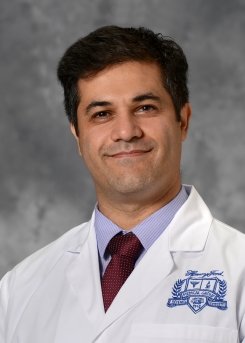
Houtan Noushmehr, PhD
Specialties: Research
Services: Cancer Research
/hfh-logo-main--white.svg?iar=0&w=300&hash=6384A2E70E92039C36CA5CCBA53F8964)
Board Certification and Education
- University of Southern California, CA, 2011
- University of Southern California, Research, CA, 2012
About Me
Member of the Henry Ford Cancer Institute
Biographical Statement
Dr. Noushmehr is a senior scientist in the Department of Neurosurgery at Henry Ford and an associate professor of physiology at Michigan State University. His research focuses on the molecular and epigenetic basis of brain tumors, particularly gliomas. His work integrates bioinformatics, cancer epigenomics and translational biomarker development to better understand tumor heterogeneity and improve diagnosis, classification and disease monitoring.
During his doctoral training, Dr. Noushmehr helped define important epigenetic features of glioblastoma, work that established his long-standing interest in DNA methylation and cancer epigenomics. He has contributed to large-scale collaborative efforts, including The Cancer Genome Atlas (TCGA), and has worked with investigators across major academic centers to study the molecular basis of cancer.
His current research focuses on glioma biology, DNA methylation-based tumor classification, liquid biopsy, and computational approaches for integrating multi-omics data to advance precision medicine in neuro-oncology.
Titles
- Associate Scientist
Research Interests
- Neuro-oncology and glioma biology: Study of the molecular and epigenetic basis of primary brain tumors, particularly gliomas, with an emphasis on understanding tumor initiation, progression, heterogeneity, and mechanisms associated with treatment resistance and recurrence.
- Cancer epigenomics and DNA methylation: Investigation of genome-wide epigenetic alterations in cancer, especially DNA methylation changes that define tumor subtype, biological behavior, and clinical outcome. This includes the discovery and application of methylation-based signatures to better understand tumor biology and improve classification.
- Molecular classification of CNS tumors: Development and application of computational approaches to classify central nervous system tumors using DNA methylation and other molecular features. This work aims to improve diagnostic precision and refine biologically meaningful tumor subgroups.
- Liquid biopsy and cell-free DNA biomarkers: Development of minimally invasive approaches to detect and monitor brain tumors using circulating cell-free DNA and epigenetic biomarkers derived from blood. The goal is to improve diagnosis, longitudinal disease monitoring, and assessment of treatment response through noninvasive molecular tools.
- Computational biology and bioinformatics: Development and use of statistical, machine learning, and bioinformatics methods to analyze large-scale genomic, epigenomic and clinical datasets. This includes use of R, Bioconductor, and other computational tools to support biomarker discovery and translational cancer research.
- Integrative multi-omics analysis: Integration of DNA methylation, gene expression, genomic, and other high-throughput datasets to better understand tumor heterogeneity, identify regulatory mechanisms, and define clinically relevant molecular subtypes across cancer and neurological disease.
- Translational biomarker development and precision oncology: Identification and validation of molecular biomarkers with potential clinical utility for diagnosis, prognosis, patient stratification and disease monitoring. This work is aimed at translating discoveries in cancer genomics and epigenomics into tools that can support precision medicine.
- Machine learning for biomarker discovery: Application of supervised and unsupervised learning approaches to identify predictive molecular patterns from complex biological datasets. Areas of interest include classifier development, feature selection, and model optimization for both tissue- and blood-based cancer biomarkers.
- Radiogenomics and imaging-genomics: Exploration of relationships between molecular tumor features and imaging characteristics, with the goal of developing noninvasive strategies that connect radiographic phenotypes with underlying tumor biology and circulating biomarkers.
- Tumor heterogeneity and regulatory biology: Study of the biological diversity within and across tumors using integrative genomic and epigenomic approaches. A particular interest is in identifying regulatory programs and epigenetic states that drive tumor progression and define aggressive disease behavior.
Videos and Articles
-
Videos
-
Blog Posts
Locations

Hospital Privileges
- Henry Ford Hospital