.svg?iar=0&hash=F6049510E33E4E6D8196C26CCC0A64A4)

/hfh-logo-main--white.svg?iar=0&hash=ED491CBFADFB7670FAE94559C98D7798)
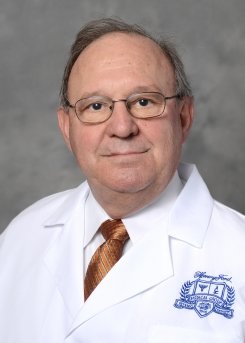
James R Ewing, PhD

Specialties: Research
Services: Cancer Research
/hfh-logo-main--white.svg?iar=0&w=300&hash=6384A2E70E92039C36CA5CCBA53F8964)
Board Certification and Education
- Oakland University, Medical Physics, MI, 1992
- Cornell University, Nuclear Science, NY, 1971
- S.U.N.Y. Maritime College, Nuclear Science, NY, 1965
About Me
Biographical Statement
Dr. Ewing is a senior scientist in the Henry Ford Departments of Neurology and Neurosurgery working mostly in the small-animal imaging laboratory. He has more than 50 years of experience in measures of cerebral physiology (blood flow, vascular permeability, interstitial spaces) in both humans and animals.
His initial focus on studies in stroke expanded to studies in cerebral tumor, with more than 25 years of experience in studies of the physiology of cerebral tumors before and after therapeutic interventions. A recent collaboration with the University of Florida, Gainesville, has led to extensive studies in the mechanical properties of tumors using input from MRI studies of tumor physiology. The long-term goal of these studies is to produce early signatures of response to therapy in these often-deadly tumors. Dr. Ewing also possesses technical expertise in applied mathematics and scientific applications programming. He has developed, maintained, and documented a suite of reconstruction, curve-fitting, and filtering programs for MRI data acquired on neurology MRI consoles.
Dr. Ewing is a professor in the Michigan State University College of Human Medicine, Department of Radiology, an adjunct professor in the Oakland University Department of Physics, and associate professor in the Wayne State University Medical School Department of Neurology. He has received numerous honors and awards over the years and is widely published.
Research Interests
- Quantification of cerebral permeability in rat models' cerebral tumor using MRI contrast agents: These measurements have led to significant discoveries in the response of cerebral tumors to therapeutic interventions, including radiotherapy (RT), with subsequent NIH funding. Dr. Ewing identified a unique procedure for estimating the compression of normal tissue in the rim of a cerebral tumor and showed that the exudate flux from the tumor was strongly related to that compression. This led to productive collaboration with other research experts in soft tissue mechanics and flows, and to the possible extension of the work to a prediction of drug distribution in cerebral tumors. This work is ongoing. Also ongoing is a study of water balance in hydrocephalus, in a groundbreaking examination of the root causes of hydrocephalus.
- Parametric estimates of cerebrovascular physiology: His long-term interests have been in developing noninvasive unbiased estimates of the parameters of cerebrovascular physiology, including cerebral blood flow (CBF), cerebral blood volume (CBV), the transvascular transfer constant, Ktrans, for an indicator, and such other related parameters as extracellular volume fraction, interstitial fluid pressure, and interstitial volume fraction. His expertise in MRI was developed with the aim of characterizing the sources of MRI contrast in cerebral tissue, associating MRI contrast with specific cerebral pathologies, and using sources of contrast, including contrast agent, to estimate the parameters of vascular physiology.
- MRI biomarkers of response in cerebral tumors: This R01 uses magnetic resonance (MR) contrast agents (CAs) and MR detection to measure blood volume, the blood-to-brain transvascular transfer constant, the extravascular extracellular space, and the total extracellular space in cerebral tumors, as well as to measure tumor blood flow using MR arterial spin tagging. These parameters present an important summary of the physiology of vasculature, both normal and tumorous. It is proposed to use these vascular parameters as MR biomarkers in animal models of cerebral gliomas. At the completion of these studies, the relation of MR-measured vascular parameters to cellular responses to single and combination therapies will be established, and the utility of MR-measured vascular parameters as predictors of long-term survival assessed. The MR-measured parameters can be translated to clinical use and evaluated as predictors of human tumor response to therapies.
- MRI measures of CA concentration
- Specialized MRI sequences and post-processing
- Data collection for collaborators
Email: jewing1@hfhs.org
Videos and Articles
-
Videos
-
Blog Posts
Locations

Hospital Privileges
- Henry Ford Hospital
- Henry Ford West Bloomfield Hospital